
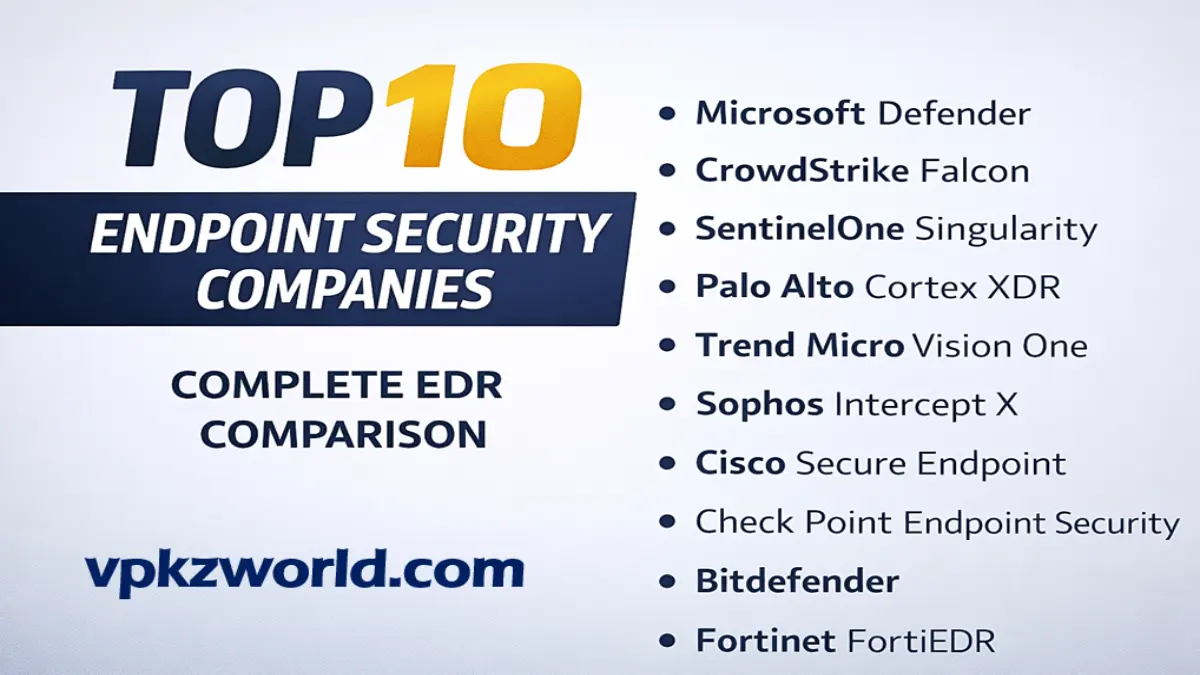

Cyber threats in 2026 are more advanced than ever. Ransomware, zero-day exploits, AI-powered phishing, and fileless malware attacks are targeting businesses of all sizes. That’s why choosing the right Endpoint Detection and Response (EDR) solution is no longer optional. It’s essential.
In this guide, we’ll cover the essentials of the top 10 endpoint security companies in 2026, compare their EDR features, and help you decide which solution is best for your organization.
What Is Endpoint Security and EDR?
Endpoint security protects devices such as laptops, desktops, servers, and mobile devices from cyber threats.
EDR stands for Endpoint Detection and Response. It doesn’t just block threats. It continuously monitors endpoints, detects suspicious behavior, investigates incidents, and automatically responds to attacks.
In 2026, most endpoint security vendors combine:
- Endpoint Protection Platform (EPP)
- EDR
- Extended Detection and Response (XDR)
- AI-driven threat intelligence
- Automated remediation
Now, let’s explore the top players leading the market for the top 10 endpoint security companies.
Top 10 Endpoint Security Companies in the World
Here is the Top 10 Endpoint Security Companies in the world that help to protect your devices.
1. Microsoft Defender for Endpoint
Microsoft Defender will continue to dominate the enterprise endpoint security space well into 2026. It is deeply integrated into Windows and Microsoft 365 environments.
Features:
- Built-in Windows OS integration
- AI-powered threat detection
- Automated investigation and remediation
- Strong XDR capabilities across email, identity, and cloud
Best For:
Large enterprises are already using Microsoft 365 and Azure.
Why It Stands Out:
It reduces the total cost of ownership since many businesses already license it through Microsoft subscriptions.
2. CrowdStrike Falcon
CrowdStrike is perhaps the most well-known name in cybersecurity today, and for good reason. It’s considered the heavyweight champion of cloud security. They revolutionized the industry by building their Falcon platform entirely in the cloud.
Note: CrowdStrike is known for its cloud-native architecture and lightweight agent.
Features:
- Real-time threat intelligence
- Advanced behavioral analytics
- Managed threat hunting services
- Fast incident response
Best For:
Enterprises with dedicated SOC teams.
Why It Stands Out:
CrowdStrike processes massive volumes of security events weekly, offering strong detection accuracy and visibility.
3. SentinelOne Singularity
SentinelOne focuses on automation and AI-driven response.
SentinelOne built its Singularity platform entirely around artificial intelligence and speed. While legacy security systems rely on human IT workers to approve quarantines, SentinelOne makes decisions automatically in milliseconds.
Features:
- Autonomous AI engine
- One-click remediation
- Ransomware rollback
- Offline protection capabilities
Best For:
Organizations wanting automated response with minimal manual work.
Why It Stands Out:
Its rollback feature can restore systems after ransomware attacks.
4. Palo Alto Networks Cortex XDR
Palo Alto Networks has been a trusted leader in network firewalls for many years. Their Cortex XDR (Extended Detection and Response) platform takes endpoint security and integrates it with the rest of your business.
Cortex XDR combines endpoint, network, and cloud telemetry.
Key Features:
- Cross-domain threat detection
- Behavioral analytics
- Integrated firewall and network data
Best For:
Organizations with complex security environments.
Why It Stands Out:
It correlates endpoint and network data for deeper visibility and faster investigations.
5. Trend Micro Vision One
Trend Micro has been in the security game for decades and has successfully transitioned into the modern AI era with its Vision One platform.
Trend Micro delivers strong XDR and endpoint protection.
Features:
- Vulnerability detection
- Virtual patching
- Email and cloud integration
Best For:
Hybrid IT environments that include cloud workloads and on-premises systems.
6. Sophos Intercept X
Sophos is popular among small and mid-size businesses. It’s true that not every company has the budget to hire a team of elite cybersecurity analysts working 24/7. Sophos fills this gap, making top-tier enterprise security a breeze.
Features:
- Deep learning malware detection
- Anti-ransomware protection
- Easy cloud-based management
Best For:
Small and mid-size businesses that need strong protection without a complex setup.
7. Cisco Secure Endpoint
Cisco created the hardware that actually powers the Internet. They bring the information from that vast, global network directly to your laptop with Cisco Secure Endpoint.
Note: Backed by Cisco’s global threat intelligence, this solution integrates well with Cisco networks.
Key Features:
- Strong network visibility
- Advanced malware analytics
- Integration with the Cisco ecosystem
Best For:
Organizations are already using Cisco security and networking products.
8. Check Point Endpoint Security
- Check Point Endpoint Security focuses on a first-line approach to prevent threats before they occur.
- It combines anti-malware, anti-ransomware, firewall, and data protection into a single platform.
- Centralized management makes it easy for IT teams to control policies across all devices.
- It’s a good option for businesses that prioritize strict security controls and compliance.
Key Features:
- Centralized policy management
- Anti-ransomware tools
- Data protection controls
Best For:
Companies that prioritize strict policy enforcement and data security.
9. Bitdefender GravityZone
Bitdefender is cost-effective but powerful. BitDefender consistently performs well in independent security tests for catching malware, and it does so without hogging your computer’s memory.
Key Features:
- Strong malware detection rates
- Easy deployment
- Good value for SMBs
Best For:
Budget-conscious small and medium businesses.
10. Fortinet FortiEDR
Fortinet FortiEDR provides real-time endpoint detection and automated incident response to quickly prevent breaches. It focuses on preventing ransomware, fileless malware, and zero-day attacks. The platform seamlessly integrates with Fortinet firewalls and security tools, providing centralized visibility and control for mid-sized businesses and enterprise environments.
Key Features:
- Automated incident response
- Real-time monitoring
- Strong integration with Fortinet firewalls
Best For:
Mid-market organizations and enterprises that use Fortinet infrastructure.
EDR Comparison Table (2026)
| Vendor | Best For | AI Detection | Automated Response | XDR Support |
|---|---|---|---|---|
| Microsoft | Enterprise | Yes | Yes | Yes |
| CrowdStrike | Enterprise/SOC | Yes | Yes | Yes |
| SentinelOne | Automation | Yes | Strong | Yes |
| Palo Alto | Complex Environments | Yes | Yes | Yes |
| Trend Micro | Hybrid IT | Yes | Yes | Yes |
| Sophos | SMB | Yes | Moderate | Limited |
| Cisco | Network-centric | Yes | Yes | Yes |
| Check Point | Prevention | Yes | Yes | Yes |
| Bitdefender | SMB Budget | Yes | Basic | Limited |
| Fortinet | Mid-Market | Yes | Strong | Yes |
How to Choose the Best EDR in 2026
When choosing a top endpoint security solution, keep the following in mind:
1. Company Size:
- Small businesses need easy management and affordable pricing. Enterprises need advanced analytics, compliance tools, and SOC integration.
2. Existing IT Stack
- If you use Microsoft heavily, Defender may be right for you. Cisco users benefit from tight ecosystem integration.
3. Automation Level
If you use Microsoft heavily, Defender may be right for you. Cisco users benefit from tight ecosystem integration.
4. Compliance Requirements
Industries such as healthcare, finance, and government may require advanced reporting, logging, and regulatory compliance features.
Conclusion
Endpoint attacks will become faster, smarter, and more automated in 2026. The best EDR solutions include:
- AI-driven detection
- Real-time monitoring
- Automated response
- Cross-platform visibility
The right choice depends on your business size, budget, internal knowledge, and existing security infrastructure. Taking the time to understand your needs today can prevent costly breaches tomorrow.
